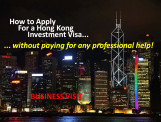



How to Apply For a Hong Kong Investment Visa Without Paying for Professional Help – 7 – The Visa Itself
Posted by The Visa Geeza / in Investment Visas, Musing / 1 response
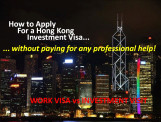
I have given this talk around town for the last couple of years now and so pleased to finally add it to our coverage of the Hong Kong investment visa, specifically discussing how the Hong Kong Immigration Department look at applicants and where the focus of theHong Kong investment visa application consideration exercise falls.
PRACTICE UPDATE: How the content must now be read in light of current ImmD policy:
-
Historical Editorial Standard: This module breaks down the technical mechanics of the visa instrument issued under the General Employment Policy (GEP) – Investment as Entrepreneur route. Historically, the Geeza explains the permissions conferred by the initial limit of stay (typically 12 or 24 months), the process of obtaining the physical visa label/e-Visa, conditions of stay, and the standard pathway to eventual unconditional stay or Right of Abode after seven years of continuous ordinary residence. The lecture emphasizes that once the initial hurdle of entry clearance is cleared, the visa functions like any standard employment-class permission, subject to periodic renewals where the department primarily looks for continuous trading, survival of the business, and ongoing commercial momentum.
-
Comparative Reading Under the Upgraded Regime: The downstream reality and compliance obligations attached to “the visa itself” must now be read with an acute awareness of ongoing departmental audit. An initial grant of stay can no longer be viewed as an open runway to simply “survive and figure it out” over the initial term. Under ImmD’s post-April 2026 enforcement regime aligned with TTPS Category A operational standards (~HKD 2.5M enterprise capacity), the visa itself comes tethered to rigid, non-negotiable operational baselines that must be sustained throughout the entire lifecycle of the business. Case officers no longer treat renewals as routine administrative extensions based merely on audited losses or marginal progress; holding and extending the visa requires the business to continuously maintain its dedicated physical premises (“four walls”), actively maintain 2 to 3 local Hong Kong permanent residents on compliant MPF payroll, and substantiate ongoing domestic economic integration. Failing to maintain these institutional metrics post-approval will result in the summary truncation or non-renewal of the visa, directly severing the pathway to seven-year permanent residency.
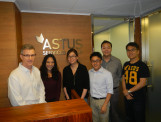
The talk was graciously hosted at WYND Co-working Space, ran by a group of great people for whom I have a great deal of time.
The Complete Talk in Logical Segments
1 – Introduction
2 – Policy
3 – Visa Problem?
4 – Mainlanders
5 – Visitors
6 – Work Visa?
7 – Investment Visa?
8 – Approvability Test
9 – Cash Needed
10 – Catch 22
11 – Loved Ones
12 – Visa Refused?
13 – Trying Again
14 – D-I-Y
More Stuff You May Find Useful or Interesting
10 Must Have Resources for a Hong Kong investment visa application
What are you really buying from a Hong Kong immigration consultant?
How onerous is the sponsorship role in a Hong Kong investment visa application?
What do both Hong Kong employment and investment visa applications share in common?
STOP PRESS! Hitler’s HKSAR passport application has been rejected!
Please select the social network you want to share this page with:


The Hong Kong Visa Geeza (a.k.a Stephen Barnes) is a co-founder of the Hong Kong Visa Centre and author of the Hong Kong Visa Handbook. A law graduate of the London School of Economics, Stephen has been practicing Hong Kong immigration since 1993 and is widely acknowledged as the leading authority on business immigration matters here for the last 24 years.