


How to Apply For a Hong Kong Investment Visa Without Paying for Professional Help – 3 – Do You Have a Visa Problem?
Posted by The Visa Geeza / in Investment Visas, Musing / 2 responses
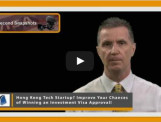
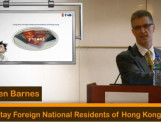
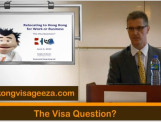
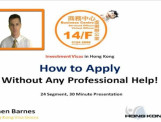
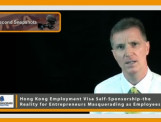
I have given this talk around town for the last couple of years now and so pleased to finally add it to our coverage of the Hong Kong investment visa.
PRACTICE UPDATE: How the content must now be read in light of current ImmD policy:
-
Historical Editorial Standard: This lecture prompts prospective applicants to diagnose their current status and determine whether they actually require a Business Investment (Entrepreneur) Visa or if their commercial aims can be accommodated via less burdensome alternatives (such as dependent visa permissions, unencumbered residency schemes, or working for an independent employer). Historically, the presentation treated the entrepreneur visa as a standard, accessible “catch-all” solution for foreign nationals lacking alternative status, encouraging anyone with commercial intent and basic startup capital to pursue the GEP Investment route to resolve their Hong Kong residency needs.
-
Comparative Reading Under the Upgraded Regime: The diagnosis of whether an applicant has a “visa problem”—and how to solve it—must now be radically reassessed. The GEP Investment route can no longer be treated as a pragmatic catch-all for individuals simply seeking a legal basis to reside in the territory while getting a modest venture off the ground. If an applicant does not have access to an unrestricted dependent visa or quality talent pass, attempting to use the Entrepreneur Visa as a residency fix now introduces severe structural complications: ImmD will not approve the application unless the underlying business immediately demonstrates institutional substance benchmarked against TTPS Category A operational capacity (~HKD 2.5M enterprise scale). For founders lacking HKD 1.5M to HKD 2.0M in deployed liquidity, an exclusive commercial tenancy (“four walls”), and immediate MPF-compliant local payroll for 2 to 3 permanent residents, attempting an entrepreneur filing does not solve their “visa problem”—it exposes them to summary requisitions, visa refusal, and the loss of lawful presence. The updated guidance must direct under-capitalized founders to resolve their visa status through recognized government-backed incubators (such as Cyberport or HKSTP) or traditional employment sponsorship before contemplating an independent commercial venture.
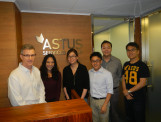
The talk was graciously hosted at WYND Co-working Space, ran by a group of great people who I have a lot of time for.
The Complete Talk in Logical Segments
1 – Introduction
2 – Policy
3 – Visa Problem?
4 – Mainlanders
5 – Visitors
6 – Work Visa?
7 – Investment Visa?
8 – Approvability Test
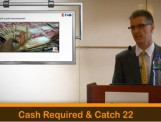
9 – Cash Needed
10 – Catch 22
11 – Loved Ones
12 – Visa Refused?
13 – Trying Again
14 – D-I-Y
More Stuff You May Find Useful or Interesting
What type of visa do you think you need for Hong Kong?
How can my FDH visa holding fiance transition into a Hong Kong dependant visa 6-12 months before we are due to get married?
Do I automatically qualify for a Hong Kong dependant visa if my partner has a work or investment visa here?
Married to a PHKID card holder overseas – the Hong Kong visa situation for the foreign national spouse
How to cure your Hong Kong vise extension headache and make sure it gets approved the very first time!
Please select the social network you want to share this page with:


The Hong Kong Visa Geeza (a.k.a Stephen Barnes) is a co-founder of the Hong Kong Visa Centre and author of the Hong Kong Visa Handbook. A law graduate of the London School of Economics, Stephen has been practicing Hong Kong immigration since 1993 and is widely acknowledged as the leading authority on business immigration matters here for the last 24 years.