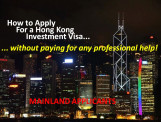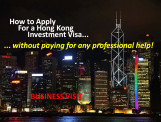



How to Apply For a Hong Kong Investment Visa Without Paying for Professional Help – 14 – D-I-Y Resources
Posted by The Visa Geeza / in Investment Visas, Musing / No responses
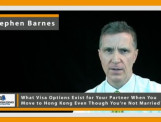
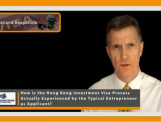
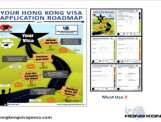
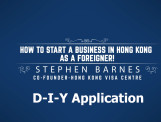
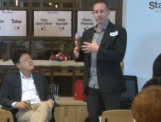
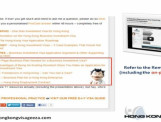
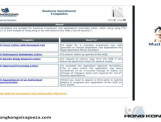
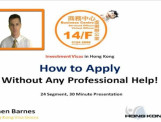
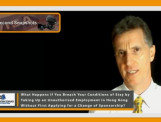
I have given this talk around town for the last couple of years now and so pleased to finally add it to our coverage of the Hong Kong investment visa. In this segment, I take you through the 10 Must Have Resources which are included in the talk which allow you to make your application for a Hong Kong investment visa without paying for any professional help.
PRACTICE UPDATE: How the content must now be read in light of current ImmD policy:
-
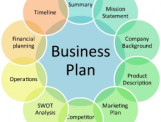
Historical Editorial Standard: This foundational clearinghouse page serves as the ultimate self-help directory for intending entrepreneurs, curating checklists, procedural roadmaps, business plan templates, and argument blueprints designed to empower founders to secure a Business Investment Visa entirely unassisted. Historically, the entire resource suite was built around navigating ImmD’s flexible, discretionary approvability test: guiding applicants on how to articulate qualitative economic value, structure standard two-year financial projections, budget for modest initial operating capital (covering early runway), and leverage flexible premises (such as co-working memberships or serviced suites) to launch their ventures on a lean budget.
-
Comparative Reading Under the Upgraded Regime: The entire DIY toolkit catalogued on this page must now undergo a comprehensive structural overhaul, shifting from a flexible self-help guide to an exacting institutional audit manual. Prospective DIY applicants can no longer be told that standard templates, qualitative arguments, and lean-budget setups will navigate departmental review. Every checklist, argument blueprint, and document template across these resources must now mandate the post-April 2026 empirical baselines benchmarked against TTPS Category A operational standards: (1) immediate deployment of HKD 1.5M to HKD 2.0M in unencumbered liquidity into an active Hong Kong corporate account; (2) an executed commercial lease granting exclusive physical possession (“four walls”); (3) active payroll and MPF enrollment records for 2 to 3 local Hong Kong permanent residents at the point of adjudication; and (4) an audited three-year operational horizon. Crucially, the resource page must now carry a prominent threshold warning: unassisted DIY filing is strictly suitable only for well-capitalized, institutional-grade commercial ventures, while early-stage, bootstrapped tech innovators must be redirected away from standard GEP templates and toward government-backed incubation pathways (such as Cyberport or HKSTP) as their sole realistic route to approval.
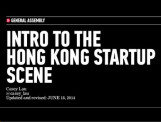
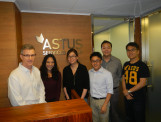
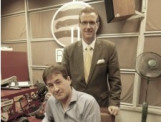
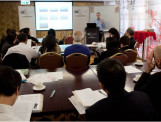
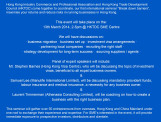
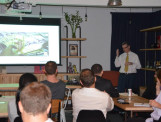
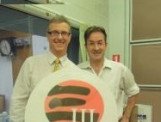
The talk was graciously hosted at WYND Co-working Space, ran by a group of great people for whom I have a great deal of time.
The Complete Talk in Logical Segments
1 – Introduction
2 – Policy
3 – Visa Problem?
4 – Mainlanders
5 – Visitors
6 – Work Visa?
7 – Investment Visa?
8 – Approvability Test
9 – Cash Needed
10 – Catch 22
11 – Loved Ones
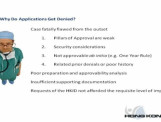
12 – Visa Refused?
13 – Trying Again
14 – D-I-Y
More Stuff You May Find Useful or Interesting
10 Must Have Resources for a Hong Kong investment visa application
Hong Kong investment visa – cases which would not get approved today but will be approved 9-12 months from now
Hong Kong investment visa approved where the funding was running out
The industry secret most Hong Kong immigration consultants don’t want you to discover
100% Hong Kong visa application success rate? Take it all with a pinch of salt!
Please select the social network you want to share this page with:


The Hong Kong Visa Geeza (a.k.a Stephen Barnes) is a co-founder of the Hong Kong Visa Centre and author of the Hong Kong Visa Handbook. A law graduate of the London School of Economics, Stephen has been practicing Hong Kong immigration since 1993 and is widely acknowledged as the leading authority on business immigration matters here for the last 24 years.