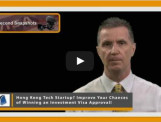



11 – How to Apply For a Hong Kong Investment Visa Without Any Professional Help – Pillars of Approval
Posted by The Visa Geeza / in Investment Visas, Musing / 16 responses
PRACTICE UPDATE: How the content must now be read in light of current ImmD policy:
Historical Context: The Three Pillars of Discretionary Approvability
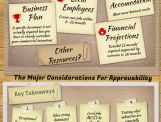
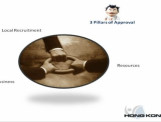
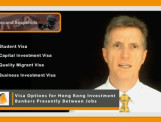
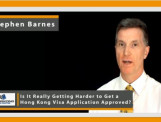
Historically, as examined in 11 – How to Apply For a Hong Kong Investment Visa Without Any Professional Help – Pillars of Approval, this installment of the Centre O presentation series broke down the core approvability test for self-represented Investment as Entrepreneur applicants under the General Employment Policy (GEP). The Geeza articulated the statutory requirement to make a “substantial contribution to the economy of the HKSAR” through three qualitative pillars: capital investment, commercial premises, and local job creation. Under the prevailing discretionary regime, these pillars functioned as a holistic, flexible stool rather than rigid minimum thresholds. Case officers possessed broad administrative latitude to evaluate whether the business made commercial sense in the round. A founder did not need an enterprise-grade operation on day one; an applicant could comfortably secure approval by showing modest seed capital of a few hundred thousand Hong Kong dollars (sufficient to reach operational break-even), securing a cost-effective desk in a serviced office or co-working suite, and presenting a credible narrative business plan projecting the creation of 1 to 2 local jobs over a phased two- to three-year ramp-up period.
Modern Reality: The Flattening into a Day-One Forensic Hardware Audit
As detailed in A Major Strategic Shift: The Upgraded Assessment Regime for Hong Kong’s Investment as Entrepreneur Visa, the tripartite pillars have been completely dismantled as qualitative, forward-looking guideposts. In their place, post-April 2026 administrative practice aligned with Top Talent Pass Scheme (TTPS) Category A operational substance, benchmarked at an enterprise scale of approximately HKD 2.5 million, enforces an unforgiving, binary hardware audit. ImmD no longer treats capital, premises, and hiring as narrative intentions to be demonstrated over time. For un-incubated applicants, the statutory test requires all three operational pillars to be fully deployed and empirically verified on day one: HKD 1.5 million to HKD 2.0 million in dedicated corporate liquidity deposited in a local Hong Kong business bank account; an executed commercial tenancy agreement for exclusive physical premises (four walls), which strictly disqualifies serviced offices, virtual addresses, shared desks, and co-working spaces; and active Mandatory Provident Fund (MPF) payroll contributions for two to three full-time local Hong Kong permanent resident employees already working on-site.
Strategic Baseline: The Death of Narrative Balance vs. The Incubator Monopoly
Consequently, relying on the historical conception of the “three pillars” as a balancing test where strength in one area compensates for early-stage leaness in another is an absolute administrative trap. An un-incubated founder who files an application relying on a persuasive business plan, modest seed capital, a shared desk, and promises of future local employment will face immediate, summary refusal. This instant rejection extinguishes lawful permission to stay, forces an abrupt departure from Hong Kong, and permanently breaks the applicant’s continuous ordinary residence chain required to secure Right of Abode under the seven-year rule. The modern business entry framework enforces an absolute institutional monopoly: formal, documented admission into an officially accredited government incubation program, such as Cyberport, the Hong Kong Science and Technology Parks Corporation (HKSTP), or the Design Incubation Programme, serves as the sole surviving statutory mechanism recognized by ImmD to waive the mandatory upfront liquidity, dedicated commercial lease, and immediate MPF headcount thresholds. Outside this accredited institutional safe harbor, independent applicants cannot balance these pillars through storytelling; they must deliver enterprise-scale corporate hardware from inception or face inevitable refusal.
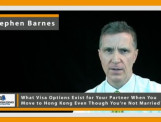
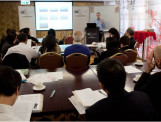
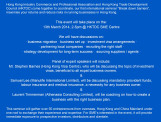
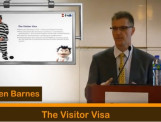
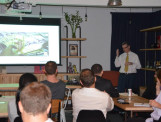
On January 17, 2013 I gave a talk at Centre O in Wanchai on how to go about applying for a Hong Kong business investment visa without the need to pay for any professional help.
The 30 minute talk was broken down into 24 very easy to digest segments and each of these segments is presented here.
The talk is designed to allow the D-I-Y visa applicant to use the 100% free resources of both the Hong Kong Visa Handbook as well as the Hong Kong Visa Geeza Blog.
Please see:
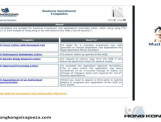
10 Must Have Resources for Any Hong Kong Investment Visa Application
and
The videos will be added incrementally over the course of the next 2-3 weeks until the entire talk has been presented.
In the meantime, why not sign up for our D-I-Y Visa Kit here?
The Complete Series
1 – Introduction
6 – Who Doesn’t Have a Visa Problem?
7 – The Pathway for Mainlanders
8 – What Can You Do as a Visitor?
10 – Investment Visa Approvability Test
11 – Three Pillars of Approval
12 – How Much Cash Investment?
13 – The Catch 22
16 – Trying Again?
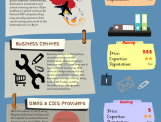
18 – 10 Must Use Resources (Infographic)
19 – 10 Must Use Resources (Visa Factsheet)
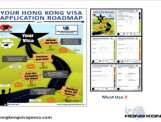
20 – 10 Must Use Resources (Application Plan)
21 – 10 Must Use Resources (Case Studies)
22 – 10 Must Use Resources (Templates)
Please select the social network you want to share this page with:


The Hong Kong Visa Geeza (a.k.a Stephen Barnes) is a co-founder of the Hong Kong Visa Centre and author of the Hong Kong Visa Handbook. A law graduate of the London School of Economics, Stephen has been practicing Hong Kong immigration since 1993 and is widely acknowledged as the leading authority on business immigration matters here for the last 24 years.