


10 Steps to a Successful Hong Kong Entrepreneur Visa Application – Step 9 – Economic Sector Advantages
Posted by The Visa Geeza / in Investment Visas, Musing / No responses
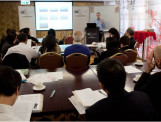
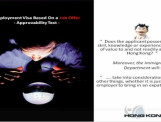
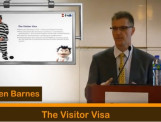
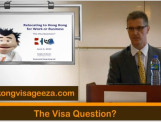
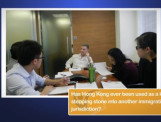
On April 21, 2017 I gave a talk at WYND Co-working space in Lan Kwai Fong entitled 10 Steps to a Successful Hong Kong Entrepreneur Visa Application.
PRACTICE UPDATE: How the content must now be read in light of current ImmD policy:
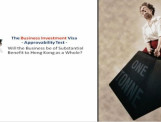
Historically, Step 9 in the 10-step series focused on how foreign founders could strategically align their business proposals with Hong Kong’s dominant, traditional economic pillars—such as import-export trade, maritime logistics, creative agencies, and bespoke financial and professional consultancies. The Geeza advised applicants to demonstrate how their ventures would weave into and bolster Hong Kong’s established service-driven ecosystem, arguing that clear industry alignment substantially satisfied the statutory “substantial contribution” test. Historically, ImmD took a commercially pragmatic and accommodating approach: an applicant operating in a recognizable commercial sector with specialized know-how, modest seed capital of a few hundred thousand dollars, a serviced office address, and plans to gradually recruit local staff over two to three years could rely heavily on the inherent value of their industry niche to secure approval.
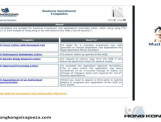
The game has changed from relying on legacy service-sector alignment into a strict institutional divide between state-prioritized tech verticals and mandatory corporate hardware. ImmD no longer grants investment as entrepreneur visas based on qualitative arguments that a business serves Hong Kong’s traditional trading or boutique consulting sectors. Policy priorities have shifted decisively toward state-directed, high-value strategic domains: artificial intelligence, life sciences, green fintech, advanced manufacturing, and deep-tech initiatives integrated with the Greater Bay Area development blueprint.
Even within these favored domains, industry relevance alone will not save an undercapitalized venture. Under post-April 2026 administrative practice aligned with TTPS Category A operational substance (~HKD 2.5M enterprise scale), sector advantages count for nothing unless the enterprise vehicle proves immediate, empirical infrastructure upfront:
- Deployed Liquidity: HKD 1.5M–2.0M verified in a local corporate bank account.
- Exclusive Physical Premises: An executed commercial lease for standalone “four walls” (serviced offices, co-working desks, and virtual addresses are completely disqualified).
- Active Local Payroll: Verifiable, ongoing MPF contributions for 2–3 local Hong Kong permanent residents.
Unless a startup operates in a state-prioritized technology sector and has secured formal admission into an officially accredited government incubator (such as HKSTP or Cyberport), commercial ambition in legacy economic sectors will face swift and summary refusal.
This segment is Step Nine – Economic Sector Advantages
The Rest of the Series
Introduction
How We Got Here
Must Have Resources
The Startup Visa
Step 1 – Understand Policy
Step 2 – Do You Have a Visa Problem?
Step 3 – Are You An Employee?
Step 4 – A Substantial Contribution?
Step 5 – 3 Crucial Elements
Step 6 – Have You Got Enough $$?
Step 7 – A Properly Set Up Office
Step 8 – Creating Local Jobs
Step 9 – Economic Sector Advantages?
Step 10 – D-I-Y Application
DOWNLOADS
Presentation Slides
Accredited Startup Programmes in Hong Kong
More Stuff You May Find Useful or Interesting
10 Must Have resources for a Hong Kong investment visa application
10 Must Have resources for a Hong Kong Quality Migrant Admission Scheme application
Can I employ myself by getting a Hong Kong business investment visa?
Hong Kong unconditional stay vs the right of abode for Capital Investment Entrant Scheme visa holders
What are you really buying from a Hong Kong immigration consultant?
Please select the social network you want to share this page with:


The Hong Kong Visa Geeza (a.k.a Stephen Barnes) is a co-founder of the Hong Kong Visa Centre and author of the Hong Kong Visa Handbook. A law graduate of the London School of Economics, Stephen has been practicing Hong Kong immigration since 1993 and is widely acknowledged as the leading authority on business immigration matters here for the last 24 years.