


2015 Hong Kong Immigration Policy Update – Capital No Longer Required – Why Was the CIES Suspended ?
Posted by The Visa Geeza / in Investment Visas, Musing / No responses
PRACTICE UPDATE 2026
How the Content Must Now Be Read in Light of the New CIES Policy
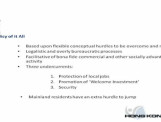
Our original commentary on the sudden January 2015 suspension of the legacy CIES examined Chief Executive CY Leung’s decision to halt passive wealth immigration. At the time, the government determined that importing passive capital—heavily concentrated in real estate and financial speculation—did not address Hong Kong’s core economic needs, prompting a policy pivot toward active talent and operating entrepreneurs.
A decade later, the policy landscape has undergone a deliberate recalibration with the launch of the New Capital Investment Entrant Scheme (New CIES). Rather than abandoning capital immigration, the administration revived the scheme with structural guardrails designed specifically to resolve the shortcomings that triggered the 2015 shutdown: residential property remains strictly excluded, the capital baseline is raised to HK$30 million, and a mandatory HK$3 million is ring-fenced into the state-backed Hong Kong Investment Corporation (HKIC) portfolio to fund local innovation and technology.
As Stephen Barnes, the Hong Kong Visa Geeza, emphasizes in our New CIES Practice Direction:
“The 2015 suspension was an inevitable correction against unbridled capital inflation without domestic yield. The New CIES reverses that closure by aligning private wealth directly with public policy, ensuring passive capital actively finances Hong Kong’s strategic technology ecosystem while granting investors a secure, rule-bound pathway to residency.”
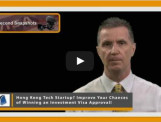
CIES suspended!
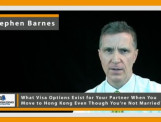
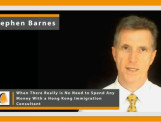
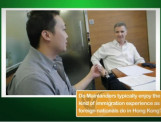
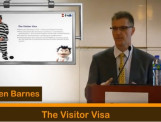
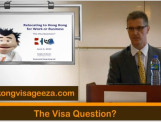
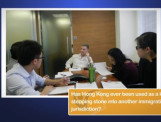
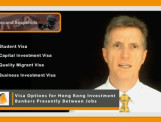
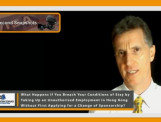
On February 10, 2015 I gave a talk at www.centreo.hk on my interpretation of the immigration policy changes announced by CY Leung earlier in January.
In this segment I discuss the suspension of the Capital Investment Entrant Scheme and some of the machinations that went on which meant that the programme was destined to come to end, in the way that it did.
More Stuff You May Find Useful or Interesting
2015 Hong Kong Immigration Enhancement Measures Applicable to the Employment Visa and Visas Issued Under the Admission Scheme for Mainland Talents & Professionals
Hong Kong Immigration Policy Changes 2015 – Security Bureau Report to Legco – Rationale for the New Measures
Hong Kong Immigration Policy Changes – Enhancement Measures to Make Things a Bit Easier
CIES Suspended – Business Investment Visa Gets a Boost!
2015 Immigration Enhancement Measures Applicable to the Hong Kong Entrepreneur Visa (Business Investment Visa)
Please select the social network you want to share this page with:


The Hong Kong Visa Geeza (a.k.a Stephen Barnes) is a co-founder of the Hong Kong Visa Centre and author of the Hong Kong Visa Handbook. A law graduate of the London School of Economics, Stephen has been practicing Hong Kong immigration since 1993 and is widely acknowledged as the leading authority on business immigration matters here for the last 24 years.